
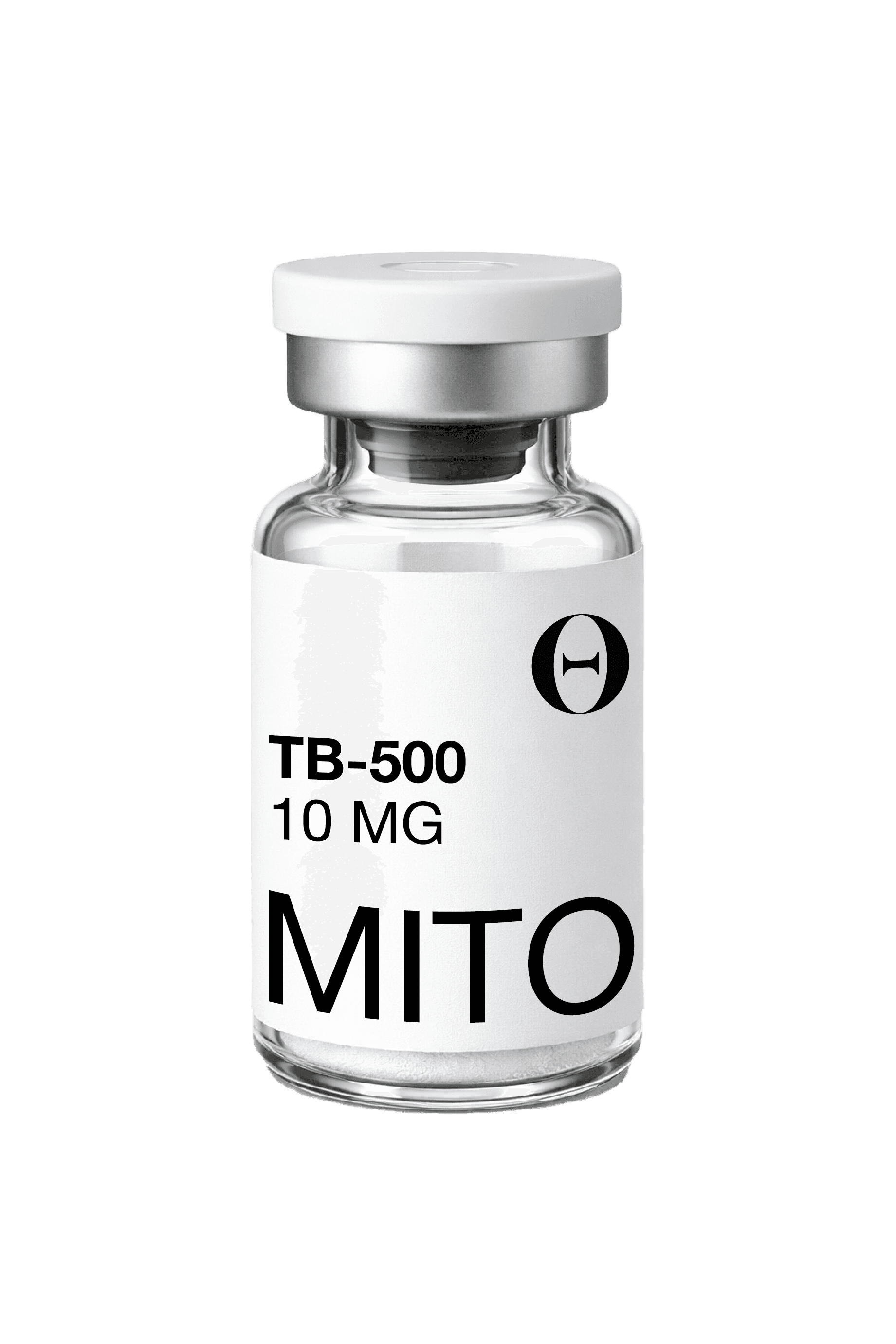
TB-500 10mg
Synthetic Thymosin Beta-4 for systemic tissue repair, reduced inflammation, and accelerated recovery from injury.
Quantity
SKU: TB10
Related Products
Local to Bali
Buying TB-500 10mg in Bali
We hand-deliver TB-500 10mg across Bali. Same-day for orders placed before 3pm local time. Order via the cart or WhatsApp — your choice. Every batch ships with a third-party Certificate of Analysis so you know exactly what you're buying.
Same-Day Delivery Zones
- Canggu
- Seminyak
- Ubud
- Uluwatu
- Sanur
- Denpasar
- Jimbaran
- Nusa Dua
Plus next-day nationwide delivery across Indonesia (Jakarta, Surabaya, Medan, Bandung, Makassar and more).
Why Buy TB-500 10mg From Mito Labs
- Independent third-party CoA on every batch — purity verified before sale.
- Cold-chain handling for peptides that require it. No degraded product.
- IDR pricing with USD reference. Pay in Rupiah, no FX surprises.
- Bali-based team — WhatsApp support in English & Bahasa Indonesia.
Read the full TB-500 10mg in Bali guide → delivery zones, pricing in IDR, and FAQs.
Community
See all →Ran CJC-1295 + Ipamorelin vs TB-500 for 12 weeks: Here’s how they compare
I just wrapped up a 12-week cycle combining CJC-1295 + Ipamorelin and TB-500, and the differences are pretty clear. ## CJC-1295 + Ipamorelin 10mg This combo really hit my recovery and sleep hard. I noticed deeper sleep with a more structured sleep cycle, which is huge for me as a surfer and fitness coach. The increase in growth hormone pulses seemed to amplify my muscle recovery post-sessions. I felt stronger gains in the gym and less soreness after intense workouts. My appetite was also up, which is great for bulking but could be a double-edged sword if you’re trying to cut. ## TB-500 10mg On the flip side, TB-500 was fantastic for overall recovery—especially with joint stiffness. I was dealing with some nagging shoulder pain, and I noticed significant improvements in mobility and flexibility. It felt like my body was healing from the inside out, and any lingering injuries from surfing were much less bothersome. I also felt less inflammation after long sessions on the waves. ### Recommendation If you’re focused on muscle growth and recovery, go with CJC-1295 + Ipamorelin. But if you’re prioritizing joint health and systemic recovery, TB-500 is where it’s at. Both have their place, but you’ll want to choose based on your specific goals. I sourced my peptides from Mito Labs, and their quality’s been solid throughout my cycles. Overall, both peptides have value, just in different ways. Choose your path wisely!
The healing stack: TB-500 + BPC-157 blend — my protocol
A lot of people ask me about stacking TB-500 and BPC-157 so I figured I'd write it up. I use the Mito Labs blend (20mg vial, 10mg of each). For a general healing/recovery protocol: **Loading phase (weeks 1-2):** - 500mcg of the blend 2x/day (morning and evening) - Pin as close to the injury site as practical **Maintenance (weeks 3-4):** - 250mcg 1x/day **Key tips:** - These peptides work synergistically — BPC-157 works locally at the injury site while TB-500 has a more systemic effect - Don't skip days during the loading phase - Store reconstituted vials in the fridge, use within 3-4 weeks - You can also run BPC-157 on its own for gut healing (250mcg 2x/day) I've recommended this protocol to probably 20+ clients at my retreat and the feedback has been consistently positive, especially for tendon and ligament injuries.
TB-500 for overall recovery during Ironman training — 8 week log
I'm training for Ironman Bali and the volume is brutal: 15-20 hours/week of swim/bike/run. Recovery was becoming the limiting factor. **Protocol:** TB-500 2.5mg subQ 2x/week for 4 weeks, then 2.5mg 1x/week for 4 weeks **What I tracked:** - Resting heart rate (via Garmin) - HRV (heart rate variability) - Weekly training volume - Injury niggles **Results:** - RHR dropped from 52 to 47 (better cardiovascular recovery) - HRV improved from avg 45 to avg 58 - Training volume: was able to increase from 16 to 20 hrs/week without breakdown - A chronic plantar fascia issue that's been bothering me for months resolved by week 6 - No new injuries despite significantly higher volume TB-500 is known for systemic healing rather than localised like BPC-157. For endurance athletes putting their body through repeated stress, it's ideal. I'm convinced it's the reason I've been able to push training volume without the usual accumulation of micro-injuries. Will definitely continue through race day.